
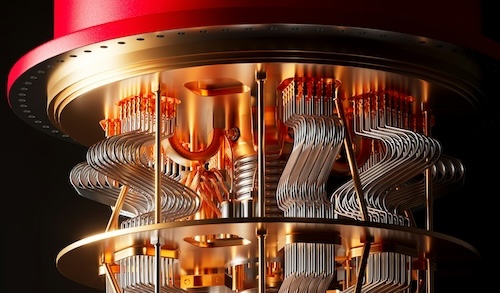
Quantum computing systems are available through several commercial cloud platforms and can be accessed through CloudBank. CloudBank recommends a three-phase progression for quantum computing projects:
Phase 0: Simulators: Develop and test your algorithms on simulators connected to the quantum system you intend to use. This is free or low cost and lets you validate your approach before spending on hardware.
Phase 1: Viability study: Experiment on quantum hardware (up to ~$10K) to test whether your approach works on real devices.
Phase 2: Scale-up review: If your project needs to go beyond the Phase 1 limit, CloudBank will review your results and needs and make a decision on higher spending. Contact help@cloudbank.org to start this review.
When exploring these offerings, four components are worth keeping in mind:
- Cloud access and pricing for quantum services.
- Quantum hardware options, which vary significantly across providers and use cases.
- Free or low cost quantum simulators for algorithm development.
- Programming tools and SDKs used to run jobs and interact with each platform.
Below is a summary of quantum computers that are available from each commercial cloud vendor followed by a short description of the types of quantum computers.
Vendors: Quantum Computer Comparison
The information in this table is current as of September 2026.
| Vendor | Cloud | Hardware Model | Qubit Count | Type of Quantum Computer | Pricing |
|---|---|---|---|---|---|
| AQT | AWS Braket | IBEX Q1 | 12 | Trapped‑ion (gate‑model) | $0.02350 per shot + $0.300 per task |
| D‑Wave | AWS Marketplace | Advantage and Advantage2 (Leap) | 4,400+ | Quantum annealer (not a gate‑model) | Quote required. Please reach out to help@cloudbank.org if interested in further details. |
| IBM Quantum | IBM Cloud | Heron R2-R3 | 156 | Superconducting (gate‑model) | Pay‑As‑You‑Go: $96/min; Flex: $72/min; Premium: $48/min |
| IBM Cloud | Nighthawk r2 | 120 | Superconducting (gate‑model) | Pay‑As‑You‑Go: $96/min; Flex: $72/min; Premium: $48/min | |
| IonQ | AWS Braket | Forte-1 and Forte Enterprise-1 | 36 | Trapped‑ion (gate‑model) | $0.080 per shot + $0.300 per task |
| Azure Quantum | Aria‑1 | 25 | Trapped‑ion (gate‑model) | $97.50 minimum per program (error mitigation on); $12.4166 minimum (off); per‑gate‑shot: $0.000220 (1‑qubit), $0.000975 (2‑qubit) | |
| Azure Quantum | Forte‑1 and Forte Enterprise‑1 | 36 | Trapped‑ion (gate‑model) | $168.195 minimum per program (error mitigation on); $25.7899 minimum (off); per‑gate‑shot: $0.0001645 (1‑qubit), $0.001121 (2‑qubit) | |
| IQM | AWS Braket | Emerald | 54 | Superconducting (gate‑model) | $0.00160 per shot + $0.300 per task |
| AWS Braket | Garnet | 20 | Superconducting (gate‑model) | $0.00145 per shot + $0.300 per task | |
| Pasqal | Azure Quantum | FRESNEL | 100 | Neutral‑atom (gate‑model) | EUR 3,000 per QPU-hour + Azure Blob Storage costs |
| Quantinuum | Azure Quantum | System Model H2 | 56 | Trapped‑ion (gate‑model) | Quote required. Please reach out to help@cloudbank.org if interested in further details. |
| QuEra | AWS Braket | Aquila | 256 | Neutral‑atom (analog Hamiltonian simulator) | $0.010 per shot + $0.300 per task |
| Rigetti | AWS Braket | Cepheus 1-108Q | 108 | Superconducting (gate‑model) | $0.000425 per shot + $0.300 per task |
| Azure Quantum | Cepheus 1-108Q | 108 | Superconducting (gate‑model) | 0.02 per 10-millisecond increment of job execution time |
Types: Quantum Computer Comparison
| Type of Quantum Computer | How It Works | Strengths | Limitations | Best For |
|---|---|---|---|---|
| Superconducting (Gate‑Model) IBM, Rigetti, IQM | Superconducting circuits cooled near absolute zero; microwave pulses implement gates. | Fast gate speeds; mature fabrication; strong error‑correction research; widely used in industry. | Shorter coherence times; limited qubit connectivity; scaling requires complex wiring. | General‑purpose algorithms, error‑correction research, fast circuit execution. |
| Trapped‑Ion (Gate‑Model) IonQ, Quantinuum, AQT | Individual ions suspended in electromagnetic traps; lasers manipulate qubits and entanglement. | Highest fidelities; long coherence times; all‑to‑all connectivity simplifies circuits. | Slower gate speeds; scaling to very large systems is challenging. | Algorithms sensitive to connectivity (VQE, QAOA), high‑precision circuits, early fault‑tolerance. |
| Neutral‑Atom (Gate‑Model or Analog) QuEra, Pasqal | Neutral atoms arranged in optical tweezers; Rydberg interactions create entanglement; arrays can be reconfigured. | Highly scalable (hundreds–thousands of qubits); flexible geometries; supports both gate‑model and analog modes. | Gate fidelities still improving; analog mode is powerful but less general‑purpose. | Quantum simulation, many‑body physics, large‑scale optimization, emerging gate‑model workloads. |
| Quantum Annealing D‑Wave | System evolves toward the lowest‑energy state of an Ising model; specialized hardware for optimization. | Thousands of qubits; excellent for certain optimization and sampling problems; mature commercial ecosystem. | Not a universal quantum computer; cannot run gate‑model algorithms (Shor, Grover, VQE, etc.). | Combinatorial optimization, graph problems, routing, scheduling, sampling. |
Learning Resources
- Learn Quantum Computation using Qiskit is a free general-purpose textbook published by IBM's quantum group that teaches the basics of quantum computation and algorithms using their qiskit domain-specific language
- Microsoft Azure Quantum learning resources
- AWS Braket Getting Started